


Introduction
There is no single best fixed asset management software or best fixed asset tracking software; there is a best fit for your buyer type. A controller defending the register in an audit, an operations manager tracking equipment across sites, and a small team leaving spreadsheets should each shortlist different products.
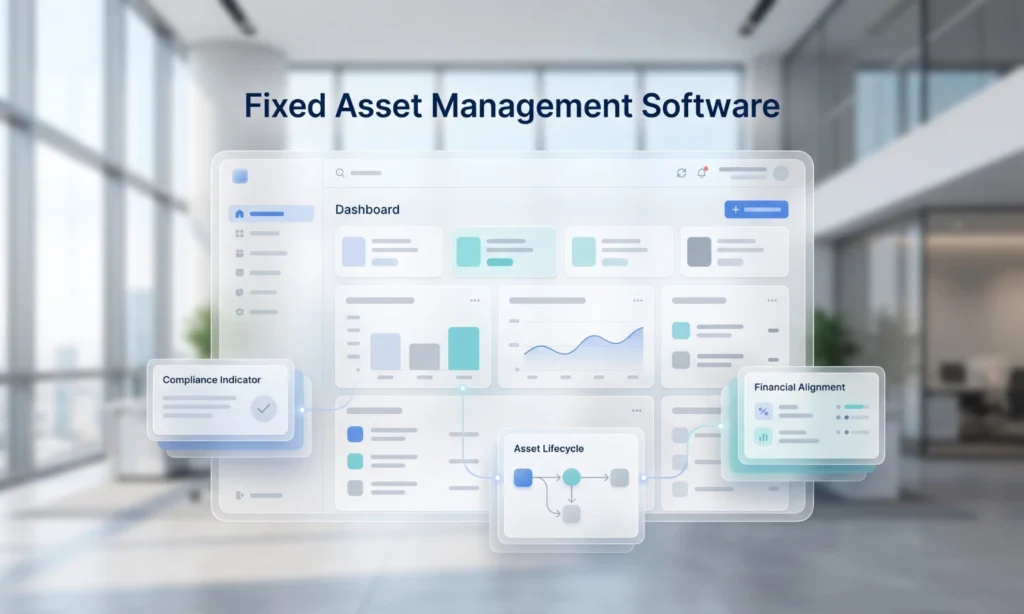
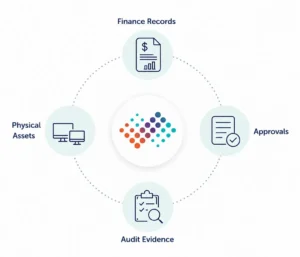
Most organizations need both jobs done: the books must be right, and the assets in the books must physically exist. Before comparing vendors, it helps to understand what complete fixed asset management software should cover across physical asset events, financial records, approvals, ERP updates, and audit evidence.
This guide explains how the two differ, what to look for in each, and how the leading vendors compare, so you can build a focused shortlist instead of working from a generic top-10 list.
Disclosure: AssetCues publishes this guide. AssetCues is a fixed asset management platform reviewed below. Our picks are editorial judgments based on public product information and user reviews on G2 and Capterra.
In this guide, you will learn:
- How to assess fixed asset management and tracking software across finance, physical verification, custody, approvals, and ERP requirements.
- What to look for in asset registers, depreciation, tagging, mobile verification, audit evidence, integrations, and exception handling.
- How to evaluate vendors using weighted criteria, consistent demo tests, real asset data, and practical lifecycle scenarios before shortlisting.
- How to choose between accounting tools, ERP modules, tracking platforms, ITAM systems, and combined solutions based on your requirements.
Fixed asset management vs. fixed asset tracking software
The two categories answer different questions. Management software answers “what do we own, what is it worth, and is the register right?” Dedicated fixed asset tracking software answers “where is each asset, who has it, and does it still exist?”
| Comparison point | Fixed asset management software | Fixed asset tracking software |
|---|---|---|
| Core question | Is the register accurate and audit-ready? | Where is the asset and who holds it? |
| Primary owner | Finance, accounts, internal audit | Operations, admin, facilities, IT |
| Core functions | Capitalization, register, depreciation records, approvals, disposals, ERP posting | Tagging, scanning, check-in/out, transfers, location, physical verification |
| Main output | Accurate register and audit evidence | Real-time visibility of assets and custody |
| Typical gap | Records drift away from what is physically on the floor | Movements never reach the books or the ERP |
When both layers sit in separate systems, the gap between them is where ghost assets, unrecorded assets, and audit findings come from. That is why many enterprises now look for one platform that covers both.
How each covers the fixed asset lifecycle
| Lifecycle stage | Management software | Tracking software |
|---|---|---|
| Acquisition and capitalization | Records cost, class, and useful life with approval | Confirms receipt at the right site |
| Tagging and assignment | Creates the register entry and cost-center mapping | Applies tags and assigns custody |
| Transfers | Approves the move and updates the books | Records the physical move |
| Physical verification | Reconciles results and resolves ghost assets | Scans assets and captures evidence |
| Disposal | Approves disposal and retires the record | Confirms the asset has left |
When both columns run on one platform, every physical event becomes an approved register change instead of a year-end reconciliation task.
Key features to look for
Features of the best fixed asset management software
- Accurate central register across entities, sites and asset classes.
- Approval workflows and audit trail for capitalization, transfers and disposals.
- ERP integration that posts approved changes to SAP, Oracle, Dynamics or NetSuite.
- Depreciation support in the platform or through clean ERP sync.
Features of the best fixed asset tracking software
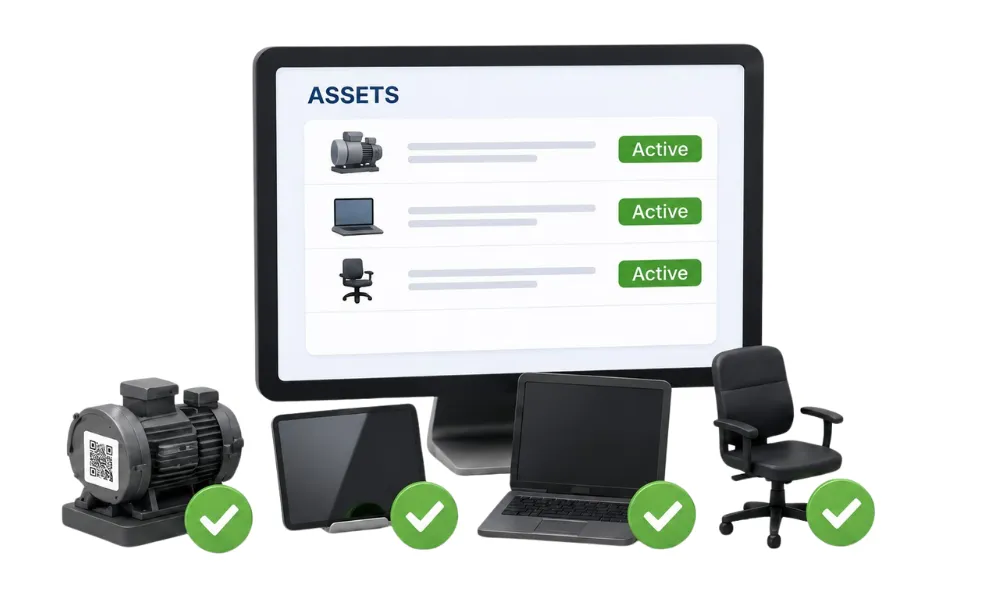
- Barcode, QR, and RFID tagging with enforced tag uniqueness.
- Mobile verification with photos, location, and offline scanning.
- Location and custody visibility for every asset.
- Exception handling for missing, found, and damaged assets.
How we evaluate (and how to score vendors yourself)
Our picks are editorial fit judgments, not lab scores. We weigh the finance and the operations side equally, because most enterprises need both. Use the weighted index below as your own scoring framework during shortlisting, and adjust the weights if your need is narrower.
| Evaluation criterion | Weight | What to test during selection |
|---|---|---|
| Audit evidence and control readiness | 18% | Can the system prove who changed what, when, with what approval and evidence? Are ghost assets routed through investigation and resolution? |
| Physical verification and mobile execution | 16% | Can field teams scan, verify, photograph and flag exceptions quickly, including at sites with weak connectivity? |
| Finance, depreciation and ERP fit | 16% | Can finance trust capitalization, useful-life, disposal and depreciation-related records, aligned with the ERP? |
| Tag integrity, location and custody | 14% | Is tag and serial uniqueness enforced? Can you see each asset’s site, custodian and transfer history? |
| Multi-site and country rollout fit | 12% | Can it support entities, locations, asset classes and local processes at scale? |
| Integration depth | 10% | Does it connect with ERP, accounting, ITSM/CMDB, HRMS and procurement without manual rework? |
| Services and implementation support | 8% | Can the vendor help with data cleanup, tagging and reconciliation when the current register is not clean? |
| Security and usability | 6% | Role-based access, SSO, audit logs, and an app site teams will actually use under time pressure. |
Best fixed asset management and tracking software in 2026
These are the platforms buyers most often compare when shortlisting the best fixed asset management software and the best fixed asset tracking software. AssetCues is ours; the others are reviewed with their strengths and watchouts.
1. AssetCues: Best for audit-ready management and tracking in one platform
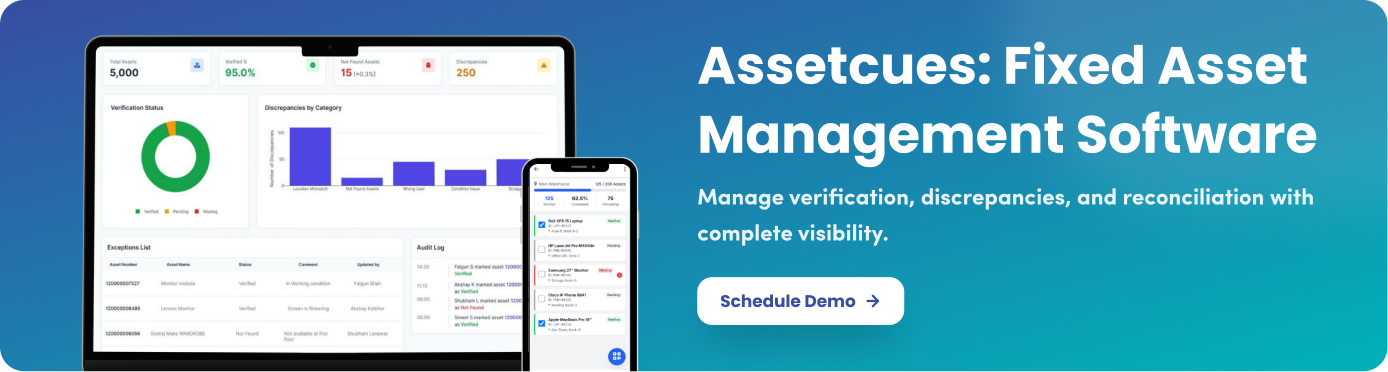
AssetCues is built for the point where finance records, physical assets, approvals and audit evidence must stay aligned. It combines a governed fixed asset register, approval workflows, audit trails and mobile, AI-assisted asset verification software in one platform, so management and tracking run on the same data.
Tag and serial uniqueness is enforced across barcode, QR and RFID against a controlled tag registry, so verification results reconcile cleanly. Ghost assets, items on the register that cannot be found, are identified during verification and routed through investigation, approval and ERP update instead of sitting in the books.
Prebuilt ERP connectors for SAP, Oracle and Microsoft Dynamics sync approved physical changes back to the ERP, so reconciliation does not pile up at year-end. A services layer for tagging, register preparation and reconciliation supports rollouts where legacy data is not clean enough for software alone.
Where it fits: Mid-size to large enterprises with recurring audits and multiple sites or entities, where finance, IT and operations need one asset truth. Teams comparing the best fixed asset management software and the best fixed asset tracking software separately can cover both in one platform.
Where it does not: A small accounting team that only needs depreciation inside a ledger will find an accounting-native tool simpler. AssetCues is not a production-maintenance CMMS.
Demo question to ask us: “Show one asset moving from receipt to capitalization, tagging, verification, transfer approval, ERP update, a ghost-asset exception and the audit evidence export.”
2. Sage Fixed Assets: Best for depreciation-heavy finance teams
Sage Fixed Assets is a long-standing choice where depreciation and fixed asset accounting drive the decision, particularly for US tax treatments. It supports a wide range of depreciation methods and ready-to-use reports, including fileable US IRS forms.
Watchout: It is accounting-led. Test mobile evidence capture, physical verification and custody tracking before relying on it as the operational layer.
(Source: Capterra)
3. ERP-native options: NetSuite Fixed Assets Management and Xero Fixed Assets
If the business already runs NetSuite, its Fixed Assets Management module handles lifecycle records, depreciation and lease accounting inside the ERP, usually the best value when NetSuite is the core system. For small businesses on Xero, its fixed assets capability offers a simple register with depreciation and accountant collaboration.
Watchout: ERP-native modules are strongest inside their own environment. Mixed-ERP estates and physical-tracking programs typically need an ERP-neutral layer on top.
(Source: Capterra)
Regional and specialist accounting picks
- FMIS: UK organizations and public-sector bodies wanting fixed asset accounting plus tracking, with UK-based hosting and support.
- AssetAccountant: Australia/New Zealand accounting teams focused on depreciation and lease accounting.
- MRI Fixed Asset Management: Real-estate and multi-company accounting environments needing hierarchies, history and finance interfaces.
4. Asset Panda: Best for customizable mobile tracking
Asset Panda is a configurable, mobile-first tracking platform. Teams tailor fields, categories and workflows, and the app handles barcode/QR scanning, photos and on-the-spot audits. A free trial is available.
Watchout: Validate fixed asset accounting depth, ERP sync and approval evidence before making it the primary finance register.
(Source: G2)
5. EZOfficeInventory (EZO): Best for equipment-heavy teams and reporting
EZO covers availability, location, check-in/check-out, maintenance tickets and depreciation visibility in one system. It supports barcode, QR and optional RFID scanning through its mobile app, with a strong reports library.
Watchout: Test audit evidence, ERP synchronization and register governance in detail before enterprise finance use.
(Source: G2)
6. Wasp AssetCloud: Best for a one-vendor software and hardware setup
AssetCloud pairs cloud tracking software with Wasp’s own scanners, labels and RFID kits. That keeps deployment simple for schools, public-sector teams and smaller organizations, with check-in/out, audits, reporting and notifications covered.
Watchout: Enterprise finance workflows and large-ERP integration may need added controls; reporting is solid rather than analytics-deep. (Source: Capterra)
7. UpKeep: Best for maintenance-led teams (CMMS)
UpKeep is a mobile-first CMMS with an asset register attached to work orders, preventive maintenance and technician workflows. It suits teams where uptime, not accounting, drives tracking. It offers a free trial rather than a permanently free plan.
Watchout: It is not an accounting system; pair it with a finance-grade register for depreciation and audit needs.
(Source: Capterra)
If your assets are mostly IT: InvGate or Snipe-IT
ITAM-first organizations tracking laptops, devices and licenses through ITSM processes should look at InvGate (ITAM and CMDB) or Snipe-IT (open source).
Note
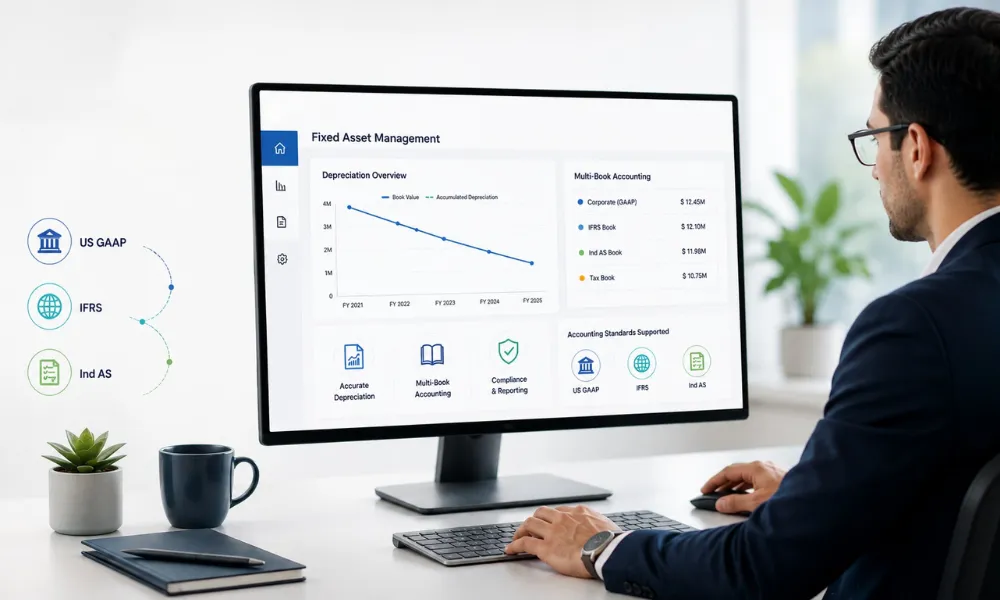
Fixed asset software for accountants covers depreciation engines built around books, bases, and filings, satisfying book and tax across US GAAP, IFRS, and Ind AS. It is its own field with its own leaders.
Fixed asset software for India compliance (Ind AS and CARO 2020)
Indian buyers should test more than features. Companies Act Schedule II useful lives, Ind AS treatments and CARO 2020’s physical-verification reporting expectations all shape the shortlist. A software-plus-verification-services model is often the practical route from Tally or SAP extracts and spreadsheets to a verified register.
Feature comparison at a glance
Legend: ● publicly confirmed during our review · D validated in a demo · — not publicly confirmed. “Not confirmed” does not mean “not available.” Vendors update products often, so confirm every capability in a demo.
| Capability | AssetCues | Sage FA | NetSuite FAM | Asset Panda | EZO | Wasp | UpKeep | Xero |
|---|---|---|---|---|---|---|---|---|
| Barcode / QR tagging | ● | D | D | ● | ● | ● | ● | — |
| RFID support | ● | — | — | D | ● | ● | — | — |
| Enforced tag/serial uniqueness | ● | — | — | D | D | D | — | — |
| Mobile physical verification with evidence | ● | D | — | ● | ● | ● | ● | — |
| Ghost-asset identification and resolution | ● | D | D | D | D | D | — | — |
| Depreciation / multi-book accounting | ● | ● | ● | D | D | D | — | ● |
| Named ERP connectors (SAP / Oracle / Dynamics) | ● | D | n/a (is the ERP) | D | D | D | — | — |
| Approval workflows and audit trail | ● | ● | ● | ● | ● | ● | ● | D |
How to run your selection
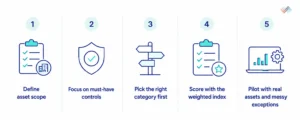
- Define the asset scope: Entities, sites, asset classes and user groups, including IT hardware, plant, vehicles and leased assets where relevant.
- Map your lifecycle gaps: Mark which lifecycle stages break today, on the finance side, the operations side, or between them.
- Pick the right category first: ERP module, accounting tool, tracking app, ITAM platform, or a platform that covers both management and tracking. Then compare within it.
- Score with the weighted index above: The downloadable scorecard mirrors it. Run the same demo script for every vendor so the best presenter cannot pass as the best product.
- Pilot with real assets and messy exceptions: Missing tags, duplicates, unrecorded assets. Decide on evidence, not presentation.
Demo script to require from every vendor: “Import 50 sample assets, tag 10, transfer 3, flag 2 as missing, create 1 found asset, request 1 disposal, attach evidence, approve the changes, show the audit trail, and show what updates back to ERP or accounting.”
Key takeaways
- Two jobs, one asset: The best fixed asset management software keeps the register right; the best fixed asset tracking software keeps the asset visible. Most enterprises need both.
- Category first, product second: An ERP module, an accounting tool, a tracking app and a combined platform solve different problems.
Conclusion
The best fixed asset management software keeps your register accurate, approved and aligned with the ERP. The best fixed asset tracking software keeps every asset visible, verified and in the right hands. If your audits, sites and asset volumes are growing, shortlist a platform that does both on one set of data, so physical events become register changes automatically.
Whichever route you take, map your lifecycle gaps, score vendors on one rubric and one demo script, and pilot with your own messy data before you sign.
FAQs
Q1. What is the best fixed asset management software?
Ans: The best fixed asset management software keeps the register accurate, routes every change through approvals, and syncs with your ERP. For enterprises with recurring audits and multiple sites, AssetCues (our product, disclosed above) combines the register with physical verification and ERP sync in one platform.
Q2. What is the best fixed asset tracking software?
Ans: The best fixed asset tracking software enforces tag uniqueness, supports mobile verification with evidence, and shows the location and custodian of every asset. When tracking must also reconcile to the register and the ERP, AssetCues covers both in one platform.
Q3. What is the difference between fixed asset management and fixed asset tracking software?
Ans: Tracking software shows where assets are and who has them. Management software also carries the finance side: capitalization, depreciation records, disposals, approvals, audit evidence and ERP integration.
Q4. Can one platform handle both management and tracking?
Ans: Yes. Combined platforms keep the register and physical tracking on the same data, so transfers, missing assets and disposals become approved register changes instead of year-end reconciliation work.
Q5. Can I use Excel instead of fixed asset software?
Ans: At small scale, yes. As assets, sites, and audits grow, manual updates, missing audit trails and duplicate entries make a spreadsheet hard to defend.
Q6. Which is better for asset tracking, RFID or barcodes?
Ans: Barcodes and QR codes are low-cost and suit one-by-one scans. RFID reads in bulk without line of sight, which speeds up large audits at a higher tag and reader cost. Many programs mix both by asset class.